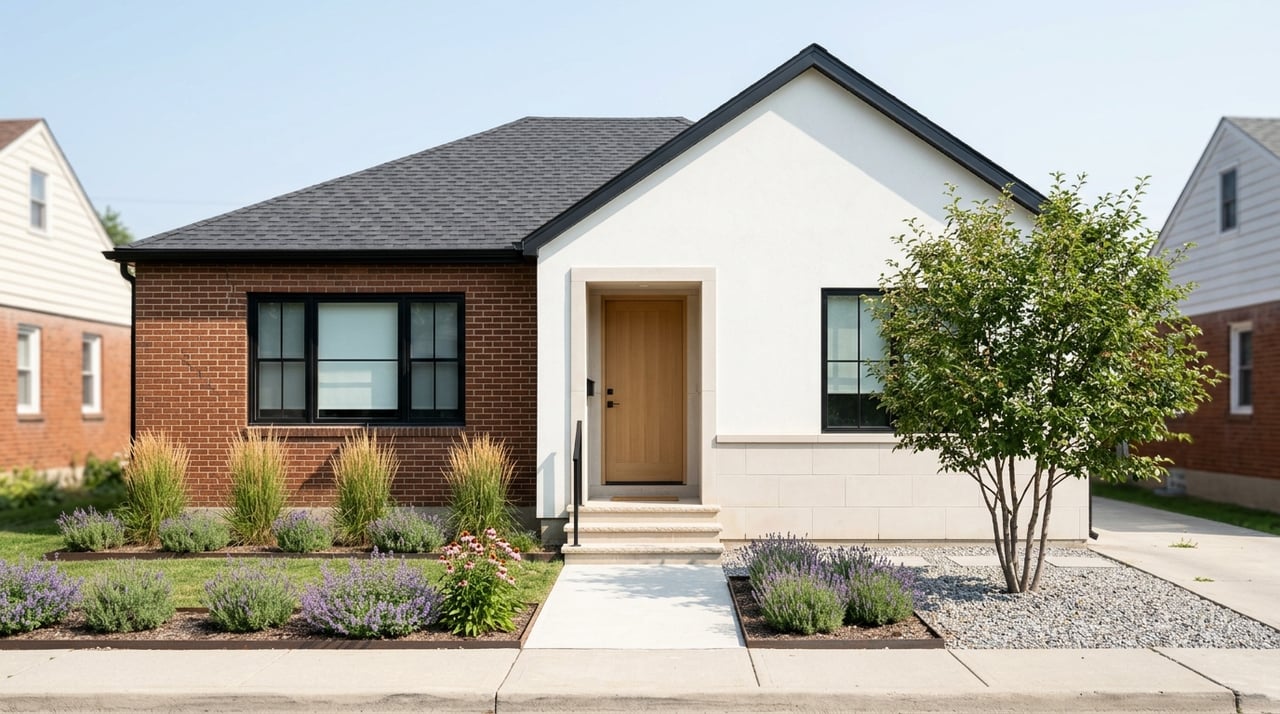
Is the Berkley Colorado Real Estate Market Worth Watching?
May 21, 2026
May 21, 2026
Wondering whether Berkley is still under the radar or already fully priced in? That is the right question to ask, especially in a northwest Denver area where market buzz, redevelopment, and rising buyer interest can blur the line between a smart move and a late one. If you are thinking about buying, selling, or holding property here, this guide will help you understand what the data actually says about Berkley’s momentum and where the opportunity may really be. Let’s dive in.
Before you judge whether Berkley is a breakout neighborhood, you need to define the map. Public data uses “Berkley” in two different ways: the U.S. Census Bureau tracks the Berkley CDP in Adams County, while Redfin and Realtor.com track Berkeley as a Denver neighborhood on the city’s northwest side. Those are not the same boundaries, so prices and trends are not interchangeable.
For this article, the breakout-neighborhood question makes the most sense in the context of the Denver Berkeley neighborhood, because that is where current market snapshots, corridor planning, and zoning changes point to the strongest story. That distinction matters if you are comparing values, studying appreciation, or trying to understand what kind of housing stock is really in play.
The latest numbers suggest Berkeley is active, competitive, and still expensive, but not overheated. Redfin reports that in March 2026, the median sale price was $783,000, down 8.0% year over year, with 43 homes sold and a median 16 days on market. Redfin also notes a 98.6% sale-to-list ratio, with homes typically selling in about 7.5 days.
Realtor.com shows a similar picture for March 2026, with 61 homes for sale, 24 rentals, a median listing price of $799,499, and a median 26 days on market. The same snapshot reports that homes sold for about asking price on average, which points to steady demand even as pricing has cooled from the prior year.
That combination is important. Berkeley does not read like a bargain neighborhood anymore, but it also does not look like a market that has lost buyer interest. In practical terms, that means you may be looking at an area with staying power rather than a short-lived spike.
A true breakout story usually needs more than home prices. It also needs structural reasons for people to keep paying attention. In Berkeley, that bigger story is tied to reinvestment, zoning, and the neighborhood’s mix of housing and commercial activity.
One of the clearest catalysts is the Tennyson Active Centers and Corridors Design Overlay, adopted in 2021. According to Denver’s District 1 office, the overlay was created to help protect historic commercial areas in northwest Denver from turning into all-residential redevelopment.
That matters because it supports the kind of neighborhood fabric that often drives long-term demand. Instead of relying only on detached-home appreciation, Berkeley’s appeal is also tied to walkable commercial corridors and a more mixed-use street life. For buyers and sellers, that can support value in a different way than a purely residential area.
Denver’s Main Street zoning districts are designed for land near transit and encourage a broad mix of uses. The zoning code includes features like build-to requirements, display windows, and upper-story stepbacks that help shape a pedestrian-friendly environment.
For you as a buyer or owner, that policy backdrop matters because it gives more context to where future value may come from. In Berkeley, the story is not just about who buys the next house. It is also about whether the neighborhood keeps building on its commercial identity and daily convenience.
Another meaningful catalyst is the 2024 Berkeley and Sunnyside ADU rezoning. Denver City Council extended ADU rights to nearly 1,700 properties in District 1, and the city said ADUs can help homeowners stabilize income, age in place, house family members, and create more attainable rental opportunities.
This is one of the biggest reasons Berkeley stands out. ADU flexibility can make a property more versatile over time, whether you are thinking about multigenerational living, future rental use, or long-term portfolio strategy. It does not guarantee value growth, but it can expand your options in a way many buyers now care about.
One reason Berkeley gets attention is that it is not a one-product neighborhood. Current sales examples tracked by Redfin show a mix of detached homes and attached housing, including larger detached homes on streets like Stuart Street and West 46th Avenue, along with attached units on Tennyson.
That variety matters if you are trying to enter the neighborhood at different price points or with different goals. Some buyers want a long-term primary home, some want lower-maintenance attached living, and some are thinking about flexibility and future value. Berkeley offers more than a single-family-only story, which can broaden the buyer pool over time.
If you are trying to figure out whether Berkeley is really “next,” comparison helps. Right now, Berkeley sits in an interesting middle ground between Highland and Wheat Ridge.
Highland is more expensive. Realtor.com’s April 2026 snapshot shows a median listing price of $975,000 in Highland, while Redfin reported a March 2026 median sale price of $877,500.
Compared with Berkeley’s roughly $783,000 sale price and about $799,499 median listing price, Berkeley looks more attainable on paper. For buyers who want northwest Denver access without reaching Highland pricing, that gap may keep Berkeley on the shortlist.
Wheat Ridge is more affordable and reads as somewhat more suburban. Realtor.com’s 80033 market snapshot shows a median listing price of $598,000, while Redfin reports a March 2026 median sale price of $590,000.
That means Berkeley costs more, but it also appears tighter on supply in the current portal snapshots. If you are choosing between the two, the decision may come down to whether you value Berkeley’s urban-neighborhood feel and mixed-use character enough to pay the premium.
This is where the breakout argument gets stronger. Berkeley is cheaper than Highland but more expensive than Wheat Ridge, which places it in a middle tier that can appeal to a wide range of buyers. It may feel more attainable than some of Denver’s higher-priced in-city neighborhoods while still offering more neighborhood energy than a more suburban alternative.
For first-time buyers with flexible expectations, that positioning can make Berkeley worth a serious look. For sellers, it means your home may benefit from demand coming from multiple directions, including buyers priced out of nearby areas.
If you are looking at Berkeley through a portfolio lens, the data points to a more nuanced answer. This does not look like a classic high-cash-flow play. Instead, it looks more like a neighborhood where appreciation potential, rental flexibility, and long-term usability work together.
Using the current median rent and list-price snapshots as a rough screen, Berkeley’s rent-to-price profile is about 3.3%, compared with about 2.5% in Highland and about 3.4% in Wheat Ridge. That suggests Berkeley may be more income-supportive than Highland, but not as yield-efficient as Wheat Ridge.
For a small investor, that can still be compelling. If your strategy is long-term wealth building rather than immediate cash flow alone, Berkeley’s mix of location, housing diversity, and ADU flexibility may fit better than the raw yield numbers suggest.
No breakout narrative is guaranteed. One clear watch item is whether corridor upgrades and ADU-enabled infill continue without weakening the retail and pedestrian character that attracts buyers in the first place.
The other factor is the broader Denver market. If market softness deepens, Berkeley may not jump into a major price run-up right away. Instead, buyers could simply gain more negotiating room in a neighborhood that remains fundamentally desirable.
That is not necessarily bad news. In many cases, the best buying window opens when a neighborhood still has strong long-term signals but less short-term frenzy.
The most honest answer is possibly, but for specific reasons. Berkeley already has strong name recognition, so this is not a hidden neighborhood waiting to be discovered. What makes it compelling now is the combination of active demand, limited supply, mixed housing types, corridor protection, and new ADU flexibility.
In other words, Berkeley’s upside is not based on being cheap. It is based on how the neighborhood may keep evolving while holding onto the features that make people want to live there. That is often what gives a market staying power.
If you are a buyer, this may be a neighborhood to watch closely before the next wave of demand pushes it further. If you are a seller, this is a market where strong positioning and neighborhood-specific strategy still matter. And if you are thinking like an investor, Berkeley may deserve a look as a long-term flexibility play rather than a simple yield play.
When you want to weigh Berkley or Berkeley opportunities with a clear neighborhood-first strategy, connect with Antoinette Bradley for a free consultation.
Stay up to date on the latest real estate trends.

The journey of buying or selling a home is personal, and Antoinette believes in guiding every client with expertise, care, and transparency. Drawing from her early real estate successes and entrepreneurial experience, she empowers clients to make confident, strategic decisions.