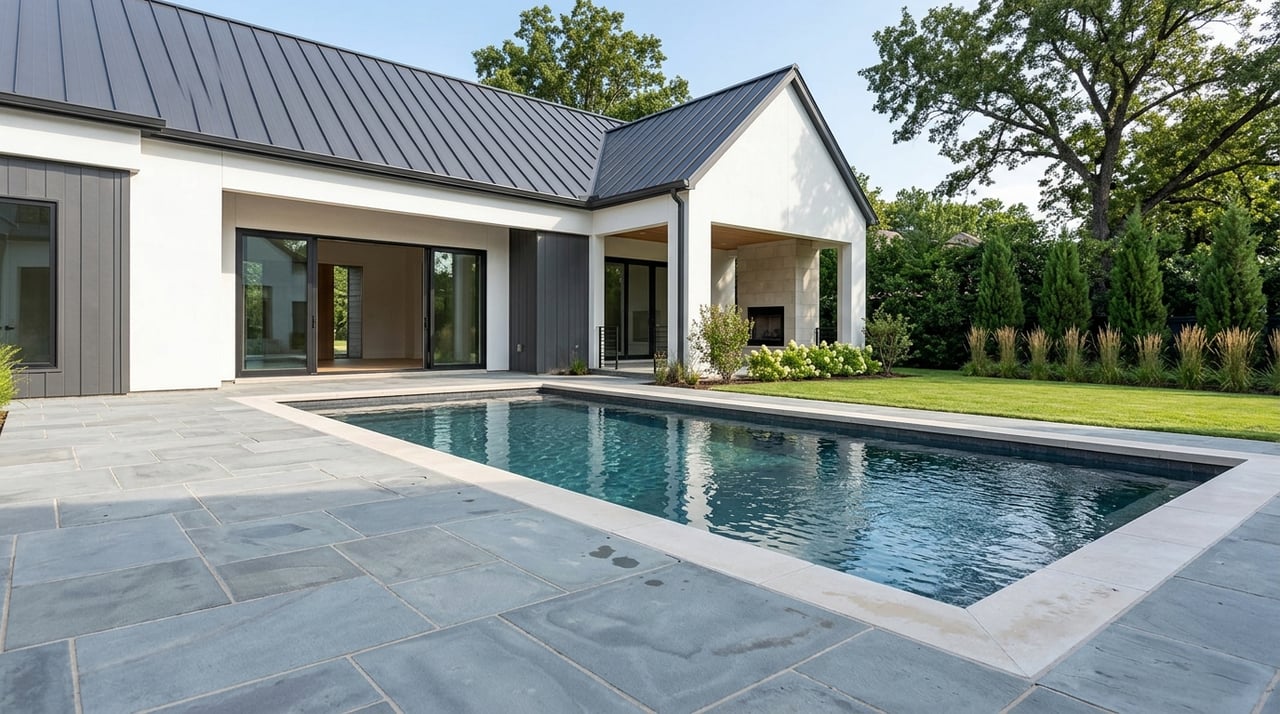
Buying a Luxury Home in Cherry Hills Village: What to Know
June 18, 2026
June 18, 2026
If you are shopping for luxury real estate in Cherry Hills Village, you are not just buying a house. You are buying into a very specific kind of market where land, privacy, timing, and long-term resale can matter as much as the finishes inside. That can feel exciting and a little complex at the same time, especially if you want a property that works both for your lifestyle now and your wealth-building goals later. This guide will help you understand how Cherry Hills Village works, what tends to drive value here, and what to watch closely before you buy. Let’s dive in.
Cherry Hills Village sits at the top tier of the metro Denver housing market, and the numbers support that position. In spring 2026, Redfin reported a three-month median sale price of $3.8 million, Zillow reported a typical home value of $3.245 million as of April 30, 2026, and Realtor.com reported a median listing price of $4.22 million.
Those figures vary because each source measures the market differently, but the takeaway is consistent. Cherry Hills Village is a high-priced, thin, and highly individualized luxury market where each property can trade on its own strengths.
Market speed also deserves attention. Redfin reported a median of 8 days on market, while Realtor.com reported average days on market of 41, which tells you that standout homes can move quickly even in a market where some listings take longer to find the right buyer.
The broader high-end Denver market has remained active, but it is not as compressed as it was during the pandemic-era peak. Denver Metro Association of Realtors reported median days in MLS for the $1 million-plus segment at 13 in May 2026, and its year-to-date March data showed 21 median days and 62 average days.
For you as a buyer, that can create a more balanced environment. You may still need to act quickly on the right property, but there can also be more room for negotiation than buyers saw in earlier peak conditions.
Cherry Hills Village also continues to stand out as a flagship luxury submarket. DMAR highlighted the area as the location of the metro’s highest-priced detached sales in both April 2026 and May 2026, which reinforces the neighborhood’s role in the upper end of the regional market.
In Cherry Hills Village, the parcel itself is often central to the value story. The city’s zoning code sets large minimum lot areas, including 2.5 acres in R-1, 1.25 acres in R-2, 1 acre in R-3, and 0.5 acre or 16,000 square feet in R-4 and R-5.
The city also regulates buildable size through floor-area ratios that generally range from 23% to 30%, depending on district. That means you cannot evaluate a property on square footage alone because the lot, zoning district, and buildable envelope may shape the long-term upside.
This is one of the biggest mindset shifts for luxury buyers here. A dated home on a rare parcel may still command strong pricing if the lot offers privacy, mature landscaping, favorable orientation, or a stronger building envelope than competing properties.
Cherry Hills Village has long emphasized an open, semi-rural, low-density residential character. That policy backdrop helps explain why buyers consistently pay for larger parcels, deeper setbacks, and visual separation from neighboring homes.
In practical terms, you are often paying for space around the house as much as the house itself. Privacy, distance, and the feel of a low-density setting are part of the value proposition.
If you are considering a teardown, major renovation, or lot assemblage, due diligence becomes even more important. The city allows some existing lots to be combined or re-subdivided, but district minimums and development caps still apply.
That means not every attractive parcel will support the same future vision. Before you get attached to a concept, it is wise to understand the zoning framework, setbacks, lot coverage, and floor-area ratio that may shape what is possible.
In many luxury markets, landscaping is seen as a bonus. In Cherry Hills Village, mature trees and screening can be a core part of a property’s functional value.
The city’s tree preservation rules are intended to preserve privacy, support the value of existing homes, maintain the semi-rural character, screen nighttime light pollution, and preserve wildlife habitat and shade. The zoning code also includes street-edge landscaping and tree planting standards for many fence configurations.
For you, this means mature landscaping is not just cosmetic. It can directly affect privacy, visual appeal, and the overall estate feel that buyers often want in this market.
Cherry Hills Village does not revolve around one dominant home style. Historic documentation points to Tudor Revival, English Cottage, estate properties with gatehouses and service buildings, and legacy farm properties with associated outbuildings.
That variety is part of the appeal. As you tour homes, you are likely to see a mix of legacy estates, expanded older residences, and newer custom homes rather than one uniform architectural pattern.
For newer homes and major expansions, design is only part of the picture. The city’s Planning and Zoning Division reviews building permits for zoning compliance, and new single-family homes or expansions of 50% or more must show compliance with lighting and tree-preservation rules.
The site-plan process may also require floor-area calculations, parking details, drainage information, and soils data. In other words, substantial projects are treated more like full site developments than simple cosmetic upgrades.
In Cherry Hills Village, strong luxury buying decisions usually come from studying the lot as carefully as the home. A beautiful interior may be easy to see during a showing, but the property’s restrictions, timing, and future flexibility often require a deeper review.
That is especially true if you are comparing a turnkey home with a remodel candidate or land play. The right choice depends on how you weigh convenience, customization, timeline, and long-term resale.
Floodplain review is a real part of Cherry Hills Village due diligence. The city says the majority of its 100-year floodplain lies on private property, and floodplain development may require permits or variances.
New or substantially improved construction in the floodplain also requires an elevation certificate. If you are looking at lower-lying lots or creek-adjacent parcels, floodplain status should be part of your early analysis.
If you are buying with renovation or rebuilding in mind, timing matters. The city states that no building permit may be issued until all development review applications are approved, and a stand-alone site-plan process can take about 4 to 6 months.
Construction is also limited to defined hours, and overnight vehicle idling restrictions apply. For custom projects, schedule is part of the investment equation, not just a background detail.
Cherry Hills Village adopted the 2024 I-Codes at the beginning of 2026. The city also notes that additions to homes without fire suppression systems may require fire-flow analysis submitted to South Metro Fire Rescue.
For buyers, the message is simple. If you plan a major remodel or full rebuild, expect a detailed and high-touch approval path.
If part of your strategy includes flexible rental use, make sure your assumptions fit local rules. Cherry Hills Village prohibits short-term rental of single-family residences for periods of less than 90 consecutive days.
That does not make a property less valuable, but it does change the math for buyers who hoped to offset ownership costs through short-term stays. In this market, value is more closely tied to use, land quality, privacy, and long-term desirability.
Cherry Hills Village offers a different kind of luxury than a dense, walkable urban district. The appeal here is quieter and more land-focused, with parks, trails, and open-space amenities shaping the day-to-day experience.
The city highlights the Village Trail, John Meade Park, Dahlia Hollow Park, Blackmer Common, and the High Line Canal. It also offers a recreation reimbursement program of up to $500 per primary household for qualifying public recreation activities.
For many buyers, that helps explain the premium. You are often choosing Cherry Hills Village for privacy, trail access, mature landscapes, and a low-density residential environment rather than for retail or nightlife at your doorstep.
Resale in a market like Cherry Hills Village is usually tied to a few core factors. Current reporting suggests that turnkey high-end homes continue to perform better than aging inventory, while well-positioned listings can still move quickly.
That means condition still matters, even in a land-driven market. If two properties offer similar lot quality, the one with stronger presentation, better maintenance, and more immediate usability may have an edge.
As you evaluate options, focus on the factors that are hardest to recreate later:
These are often the details that shape both your ownership experience and your resale position.
The biggest mistake luxury buyers can make in Cherry Hills Village is treating it like a standard move-up market. Here, square footage and finishes matter, but they do not tell the whole story.
A smarter approach is to view each property through two lenses at once: how it supports your lifestyle today and how the lot, rules, and market positioning may affect future value. That is where local insight becomes especially important.
If you are considering a purchase in Cherry Hills Village, working with an advisor who understands both the emotional side of luxury buying and the technical side of lot-driven value can help you move with more confidence. When you are ready for a thoughtful, high-touch strategy, connect with Antoinette Bradley.
Stay up to date on the latest real estate trends.
The journey of buying or selling a home is personal, and Antoinette believes in guiding every client with expertise, care, and transparency. Drawing from her early real estate successes and entrepreneurial experience, she empowers clients to make confident, strategic decisions.