Wheat Ridge's ADU Deadline Just Closed, and It's Quietly Repricing the Market
September 10, 2026
September 10, 2026
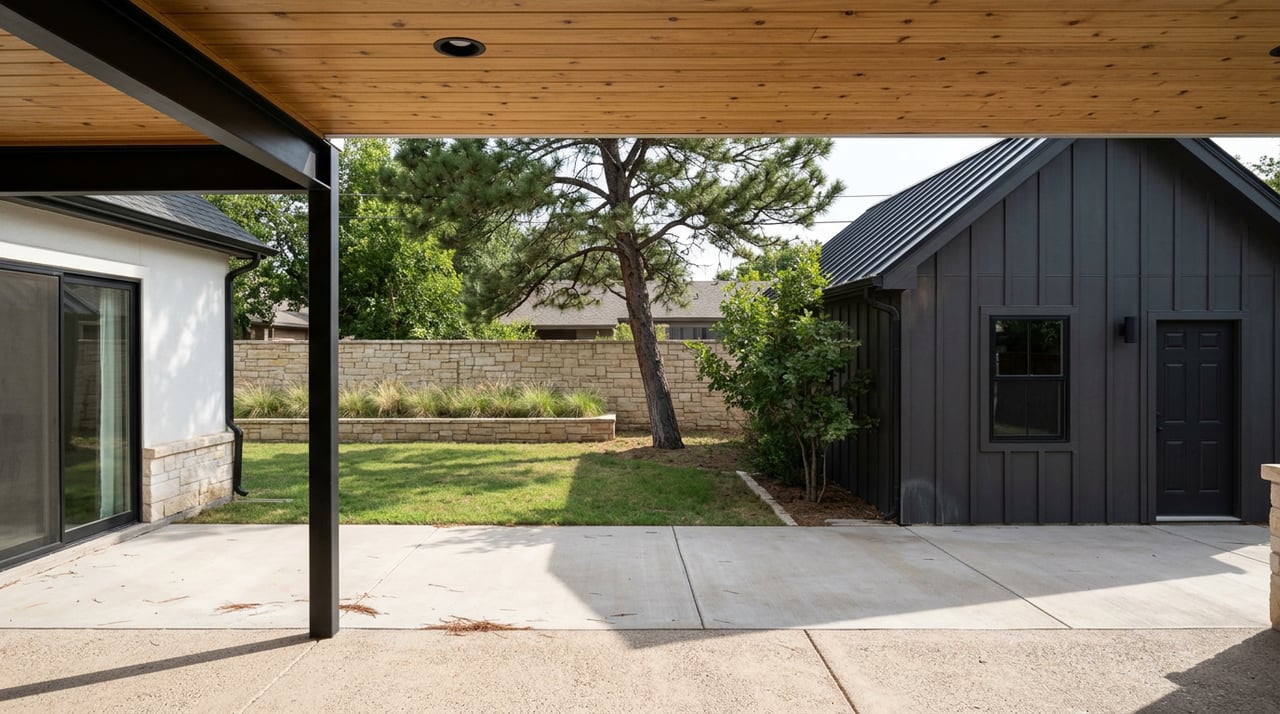
A buyer touring a bungalow near 29th and Pierce earlier this year would have found something extra in the backyard: a small detached structure, maybe 400 square feet, with its own kitchenette and a bathroom that looked older than the rest of the house. The listing agent would have called it a bonus space. A few months ago, that answer was good enough to keep moving through the tour.
It isn't anymore.
As of September 2, 2026, the City of Wheat Ridge is no longer accepting applications to legalize pre-2022 accessory dwelling units. The grace period that let owners of these older, informally built cottages, basement apartments, and garage conversions apply for legal status closed on August 15. Anything still unpermitted after that date is now subject to code enforcement rather than a straightforward application. For a city where these structures have existed quietly for decades, that's a meaningful line to cross, and it landed at the same moment two other rule changes reshaped what an ADU is even allowed to be here. Together, they explain something the median price on its own can't: why the real value signal in Wheat Ridge right now sits in what a lot is legally permitted to hold, not in the number on the sign.
Wheat Ridge was one of the last cities in the west Denver metro to allow ADUs at all. Arvada, Aurora, Boulder, Broomfield, Denver, Englewood, Golden, and Lakewood had all legalized them well before Wheat Ridge's city council finally passed Ordinance 1744 in July 2022, following six years of study sessions. The ordinance that resulted was cautious by design: new ADUs came with an owner-occupancy requirement, a size cap of 1,000 square feet or half the main house's gross floor area (whichever was smaller), and a deed restriction recorded with Jefferson County.
Then the state stepped in. A Colorado law taking effect June 30, 2025 required cities to allow ADUs on single-family lots and barred them from imposing restrictions that functionally block their use. Wheat Ridge's own deed-restriction rule qualified as exactly that kind of restriction. In May 2025, the city council voted unanimously to strip out the blanket owner-occupancy deed requirement in most cases, revise the size limits, and extend ADU eligibility into existing planned developments. Senior Planner Scott Cutler presented the changes to council, and the vote passed on second reading without dissent.
Councilmembers weren't fully comfortable rewriting a rule they'd spent six years crafting because a state law told them to. During discussion, they asked what would happen to the new, looser rules if the state law were ever repealed or struck down. Staff laid out four options, from a full sunset clause to simply waiting until it happened. Council chose the middle path: adopt the changes now, and commit to a study session if the state law ever goes away. It's a useful reminder that "the rules just changed" in Wheat Ridge doesn't mean the rules are settled. They're provisional, tied to a state statute that could itself move again.
That wasn't the end of it. On February 20, 2026, the Planning Commission voted 5-0 to recommend a second round of amendments: standardizing attached-ADU setbacks at five feet to match detached units, and creating an administrative review pathway that lets qualifying affordable housing projects skip public hearings when they meet objective code requirements. Staff was explicit about why the timing mattered. The city had just received a $4.5 million Transit-Oriented Communities Infrastructure grant from the Colorado Energy Office, and staying in compliance with state housing law is part of what keeps that funding, and future grants like it, on the table.
Put the sequence together and you get a compressed timeline: a city that resisted ADUs for six years, then rewrote its own ordinance twice in under a year, largely because Denver, not Wheat Ridge, decided the pace.
None of this would matter as much if Wheat Ridge were still moving at 2021 speed. Local market reporting through the first quarter of 2026 described pricing that held relatively steady compared to late 2025, even as homes generally took longer to sell than they did during the 2021 and 2022 peak. That's not a crash, it's a market where buyers have room to be deliberate instead of racing a bidding war, and deliberate buyers ask harder questions about what's actually on a lot.
"Is that backyard cottage actually legal" has become a much easier question to get a real answer to than it was a year ago, now that the informal legalization window has closed and a property's ADU status is either documented or it isn't. A buyer who isn't rushed has time to ask for the permit file before writing an offer, not after.
That shift cuts both ways. A single-family lot with a permitted, code-compliant ADU is now a more legible asset than it was before the deadline: rentable long-term, usable for a parent or adult child, and clearly disclosed rather than a gray area the buyer has to underwrite themselves. A lot with an undocumented structure that missed the August 15 deadline is a different conversation entirely, one that likely involves a life-safety inspection, potential modification costs, and in some cases, a structure that can't be legalized as an independent dwelling unit at all.
The rules that survived this round of changes are worth knowing plainly, because they still exclude a meaningful share of Wheat Ridge housing stock. ADUs are permitted only as an accessory to single-unit detached homes in residential, agricultural, and mixed-use neighborhood zones. They are not allowed on duplexes or other multi-unit properties, regardless of lot size. Only one ADU is permitted per lot. Short-term rental use is limited to "partial-home" rentals where the owner occupies one of the two units; whole-home Airbnb-style rentals of an ADU are not allowed, and any short-term use requires a separate city license.
When the original 2022 ordinance passed, one resident who'd followed the process for years described a neighbor's situation that captures what these units are actually built for in practice: a father living independently in a small cottage on his son's half-acre property near 29th and Pierce, a structure that predated the city's own incorporation in 1969, and a family preparing to build a small backyard unit so a daughter starting college wouldn't need to rent an apartment she couldn't afford. Those are the use cases the ordinance was written around: aging in place, multigenerational households, and modest rental income, not large-scale conversion of single-family stock into duplex-style investment property.
If you're comparing Wheat Ridge to nearby suburbs right now, a property's ADU status is worth checking before the showing, not after the offer.
None of these questions show up in the median price. All of them affect what a specific lot in Wheat Ridge is actually worth to you.
Does the August 15, 2026 deadline mean older ADUs are now illegal? Not automatically illegal, but unprotected. Structures that didn't apply during the grace period are now subject to the city's standard enforcement process rather than the simplified legalization pathway that existed before the deadline.
Can I still build a new ADU in Wheat Ridge? Yes. New ADU construction remains permitted on qualifying single-family lots, following the current size, setback, and permitting standards, including the five-foot attached-ADU setback the Planning Commission recommended in February 2026.
Does any of this apply if I'm looking at a duplex? No. ADUs in Wheat Ridge are only permitted as an accessory to single-unit detached homes. Duplex and other multi-unit properties are excluded regardless of lot size or zoning district.
The median price will keep showing up on every portal search for Wheat Ridge, and it's not wrong, it's just incomplete. What a specific lot is legally permitted to hold, and whether that permission is documented, has become one of the clearest ways to tell two similarly priced Wheat Ridge listings apart. If you're weighing a purchase here against another west-metro suburb, or thinking about what a property you already own is actually worth under the current rules, Antoinette Bradley can walk through what a specific address allows before you write an offer or list. Schedule a free consultation to start that conversation.
Stay up to date on the latest real estate trends.

The journey of buying or selling a home is personal, and Antoinette believes in guiding every client with expertise, care, and transparency. Drawing from her early real estate successes and entrepreneurial experience, she empowers clients to make confident, strategic decisions.