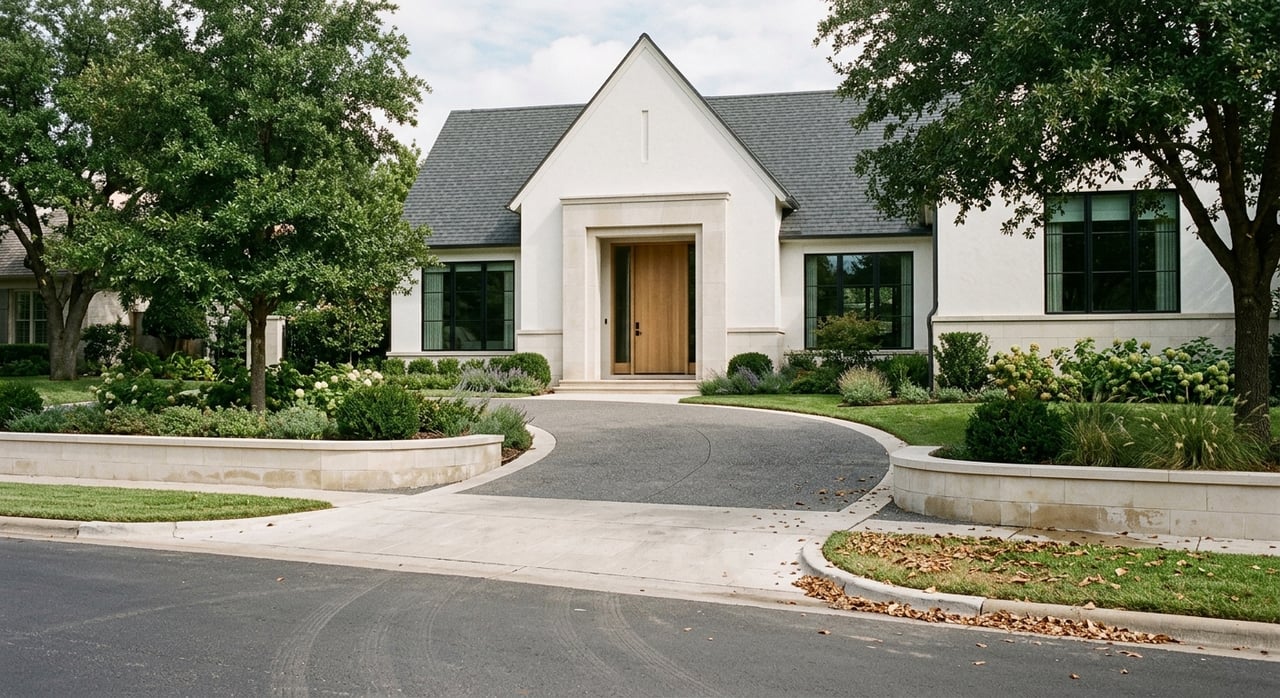
Cherry Hills Village Luxury Living: What Sets It Apart
May 28, 2026
May 28, 2026
Wondering where Denver’s luxury market feels most private, spacious, and quietly established? Cherry Hills Village stands out because it offers a rare mix of estate-scale living, open land, and a residential setting that has stayed intentionally low-density over time. If you are exploring a move, weighing a long-term investment, or simply trying to understand why this address carries so much weight, this guide will walk you through what makes Cherry Hills Village distinctive. Let’s dive in.
Cherry Hills Village is a predominantly residential city in Arapahoe County just south of Denver. The city covers about 6.5 square miles and has roughly 6,000 residents, with the 2020 Census counting 6,442 people. That smaller scale is part of what gives the area its quiet, tucked-away feel.
What sets it apart even more is the city’s long-standing planning approach. Local history and city materials show a consistent focus on preserving an open, semi-rural, single-family character despite growth across the broader metro area. In practical terms, that means Cherry Hills Village feels less like a typical suburb and more like an estate enclave.
Another reason the city feels different is that it was never built around a commercial center. The result is a community that reads as residential first, with privacy, space, and low density shaping the day-to-day experience. For many buyers, that sense of calm is the appeal.
One of the clearest reasons Cherry Hills Village has such a strong identity is its zoning. The city uses a deliberately low-density framework, with minimum lot sizes ranging from 2.5 acres in some residential areas to 16,000 square feet in others. Those standards help explain why homes here are often associated with large setbacks, mature landscaping, and custom architecture.
This is also a market where the land matters as much as the house. In many parts of Cherry Hills Village, lot size creates room for separation, outdoor living, and a more private setting than you will typically find in other Denver-area communities. If you are looking for breathing room, this is one of the city’s defining advantages.
For buyers thinking long term, this kind of land-use pattern can also support lasting appeal. A low-density community with limited inventory often attracts people who value privacy, permanence, and a more tailored ownership experience. That does not guarantee market outcomes, but it helps explain why Cherry Hills Village remains firmly in the upper tier of the Denver market.
Cherry Hills Village is known for more than large homes on large lots. The city’s accessory-structure rules explicitly contemplate features like detached guest houses, barns, detached garages, pools, and sports courts. On larger lots, additional accessory buildings may also be possible.
That flexibility matters because it shapes how properties function. Some homes can support a compound-style layout, where outdoor recreation, guest space, storage, and hobby uses each have their own place on the property. For buyers who want a residence that adapts to lifestyle needs over time, that can be a major draw.
At the same time, these features are regulated. Permits, setbacks, and lot-size thresholds all matter, so any future plans should be reviewed property by property. In a market like Cherry Hills Village, understanding what is already allowed can be just as important as the home itself.
Horses are not just a branding detail here. The city’s zoning materials state that horses and equestrian facilities are allowed in R-1 and R-2 zones, and in R-3 and R-3A on lots over one acre. Limited horse boarding and equestrian training are also separately regulated.
That helps explain why Cherry Hills Village has long carried a semi-rural reputation even while sitting so close to Denver. In certain parts of the city, equestrian use remains part of the built environment and local rhythm. For the right buyer, that is not just a lifestyle bonus. It is a meaningful part of what makes the location special.
If equestrian use is important to you, zoning details should be checked carefully before you buy. Rules vary by zone and lot size, so parcel-level due diligence is essential.
Many luxury buyers are drawn to Cherry Hills Village for one simple reason: it feels private by design. The city’s low-density zoning, large lots, and planning emphasis on preserving its semi-rural character all support that experience. This is one of the reasons the community continues to stand apart within the Denver metro.
Another factor is the city’s rule on short-term rentals. For single-family homes and accessory dwelling units, rentals of less than 30 days are prohibited. For homeowners who value a more stable and residential setting, that rule may reinforce the quiet character the city is known for.
Privacy in Cherry Hills Village is not only about gates or square footage. It is also about land use, neighborhood form, and the absence of heavier commercial activity. Together, those elements create a setting that feels insulated without feeling disconnected.
Even with its residential focus, Cherry Hills Village offers a strong public recreation network. The city maintains more than 25 miles of trails and 50 acres of parkland and right-of-way improvements. Parks are open daily from 6 a.m. to 11 p.m., which supports an active, outdoors-oriented lifestyle.
The High Line Canal is one of the area’s most notable features. The city describes it as part of an over-71-mile continuous urban trail, and a 3.75-mile resurfacing project took place within Cherry Hills Village. For residents, that trail system adds a practical and scenic layer to everyday life.
Quincy Farm adds another dimension. The city describes this 17.5-acre property in the heart of Cherry Hills Village as spanning both sides of the High Line Canal and being listed on the National Register of Historic Places. It reinforces the sense that open space and heritage are part of the lived environment here, not just a marketing concept.
Cherry Hills Country Club is one of the community’s best-known landmarks. Its official history says the club was founded in 1922 on 272 acres south of Denver and designed by William Flynn. It has also hosted numerous national championships, including the 2023 U.S. Amateur.
For buyers, that history matters less as trivia and more as context. It speaks to the long-established recreational and social ecosystem surrounding Cherry Hills Village. In luxury markets, those legacy anchors often help define how a community is perceived over time.
Most of Cherry Hills Village is served by Cherry Creek School District. The district states that school placement is determined by a specific address through its school locator, and its official school list includes Cherry Hills Village Elementary and Cherry Creek High School.
For buyers, the key takeaway is simple: school assignment should be verified parcel by parcel. In a city with varied lot configurations and boundaries, it is best not to assume placement based only on a neighborhood name or mailing address. Clear, address-level verification helps you plan with confidence.
Cherry Hills Village is a thin, high-price market. Redfin reported 38 homes for sale and a March 2026 median sale price of $4,999,000. Zillow’s home-value index reported an average home value of $3,245,374 as of April 30, 2026, along with 35 homes in for-sale inventory and a median list price of $3,613,833.
These figures are not directly interchangeable, but together they paint a consistent picture. Inventory is limited, pricing is elevated, and the market sits firmly in the upper tier of the Denver area. For buyers and sellers alike, that means strategy matters.
In a market like this, understanding property-specific value drivers is essential. Lot size, zoning, accessory-structure potential, privacy, and overall setting can all shape pricing in meaningful ways. That is why neighborhood-level analysis matters more here than broad metro averages.
Cherry Hills Village tends to appeal to buyers who want more than a luxury finish package. It often attracts people looking for space, discretion, long-term lifestyle value, and a setting that feels established rather than overstated. If your priorities include privacy, large lots, and a residential environment with lasting identity, this area may deserve a closer look.
It can also be compelling from a long-term wealth perspective because the community’s land-use structure is so distinct. Limited inventory, large parcels, and strong local identity often shape how buyers evaluate the market. For anyone making a major purchase, understanding those fundamentals can help you make a more informed decision.
Cherry Hills Village is not a plug-and-play market. Two homes with similar square footage can offer very different value depending on lot size, zoning, accessory-use potential, and location within the city. That is why local, detail-driven guidance matters.
If you are buying, you need a clear view of what a property can support now and in the future. If you are selling, you need marketing that communicates not just finishes and photos, but the deeper lifestyle value of the land, privacy, and setting. In both cases, the right strategy starts with understanding what makes Cherry Hills Village different.
If you are considering a move in or around Cherry Hills Village, working with a neighborhood-savvy advisor can help you evaluate the market with more clarity and confidence. For tailored guidance on buying, selling, or assessing long-term value in this corner of the Denver metro, connect with Antoinette Bradley.
Stay up to date on the latest real estate trends.

The journey of buying or selling a home is personal, and Antoinette believes in guiding every client with expertise, care, and transparency. Drawing from her early real estate successes and entrepreneurial experience, she empowers clients to make confident, strategic decisions.